Bhutan – Day 5 – The Phobjika Valley


A wonderful day today, beginning with a walk along the far side of the valley. We were driven to the monastery we visited yesterday and then Sunam led us down through pine forest and meadow to the valley floor. On our way we passed clumps of cotoneaster microfloris and berberis. The air was filled with the intoxicating scent of Daphne bushes, from which the Bhutanese used to make paper. We handled some later in a temple. In places the ground was turned lilac with primula. In a small village we stopped at a stupa which had a large prayer wheel turned by a waterwheel underneath it.

Once on the valley floor we crossed the boggy areas on planked walkways. The ground is quite dry compared to what it will be like when the monsoon comes in June. Below us the Nakey Chhu meandered, a river far too small for its large glacial valley. We entered the grounds of a monastic school for young children which was also a Buddhist camping site. We looked into a room which would have 4 or 5 children in it. It was clean if rather spartan. The toilets were neither being quite modern and well appointed, with the highest urinal I have ever used. At 6 foot I struggled to use it. However there seemed to be no water supply so the toilets were pretty disgusting.

Moving quickly on we crossed the valley stopping only on the bridge over the Nakey where we taught Sunam how to play Pooh sticks. He was delighted as he won – beginners luck! We climbed up the valley side, stopping at a government store. Here locals can buy basics such as rice, sugar, cheese, washing powder etc. at prices lower than in the shops. This is designed to keep people in the villages. Not sure how it goes down with local shopkeepers though!

We then climbed up a steep track past the black necked crane information centre to our restaurant for lunch. We had complained that, while we were passing hundreds of fields full of potatoes, we had had none for dinner last night. I suspect Mr Numgay may have had a word, because along with rice, pasta and noodles there were two bowls of potatoes. The first were halves of small potatoes roasted with their skins on in salt and ginger – absolutely delicious! The second was a version of gratin dauphinois and again scrumptious. Add to that a bowl of mushrooms and onions with ginger and we were in heaven. The rice and pasta did not get a look in.

There was also a log stove in the dining room which allowed us to warm up. It was actually quite cool outside and I wish I’d worn a vest or a coat.

After lunch we were driven down to the black necked crane information centre. Of course the birds have flown, to quote one of our late kings, but there were plenty of interesting boards to read and a superbly filmed documentary which explained the conservation methods the government and the RSPN are carrying out. However we did not miss out entirely on the birds. One unfortunate specimen broke his wings in 2016 and is now kept in captivity until he is well enough to join his friends on their migration north to Tibet.
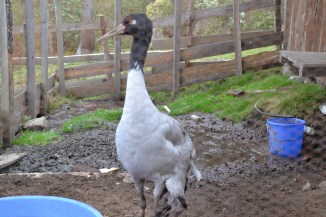
8A468F95-CE3A-4CCE-902A-48DBE2FDE3D8

In the morning I had read about a temple further up the valley dating from the C14th. Unfortunately I did not get the name quite right and Mr Numgay spent some time tracking it down. However track it down he did. It was about 1 km off the main village road and proved well worth a visit. From the outside at the back it did not look much, although it’s front entrance was beautifully painted. It’s position was impressive with great views down the valley. We entered and climbed two very steep sets of stairs to the third floor, where we ducked under a cloth over the door and into a stunningly painted room. A solitary priest greeted us, although normally there are three looking after this temple. The main altar was covered in beautifully painted butter cakes, and behind it sat a statue of the second Buddha and others of lamas or holy men. The pillars and ceiling were a riot of colour. The holy man, Longchenpa had built 8 temples in the valley. Our guide and driver seemed delighted to have the opportunity to visit this special place and carried out their prostrations and took some holy water.

On our way home we passed a government primary school and Sunam asked us if we would like to visit. We of course said we’d love to and we’re immediately walked across a field and over a bridge, the younger children forming a guard of honour as they were on their way home. We went into the older children’s classroom where 21 were bent over their books. The classroom was quite well appointed with posters on the walls, a blackboard and good classroom furniture. As we left we discovered it was scouts after school and pupils appeared in the playground wearing scarves and woggles. There they were drilled by the master and a pupil.

The library was impressive with most of the books in English and of a good quality. Lots of ladybird books and classic stories like Treasure Island and Great Expectations. Clearly education is important and pupils are keen to learn according to Sunam.
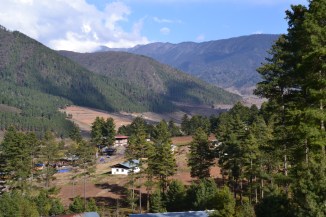
1D524F1E-C703-4BE9-B7C4-103881FC3971

The sun had now come out and the Phobjika Valley looked stunning in the evening light. We were glad to get back after a full day to a log fire and a warm room. Tonight Christine is going to try a massage offered in the hotel spa. I shall settle for a hot shower! Let’s hope there are potatoes for dinner!


Bhutan – Day 4 Thimphu to Gangteng

I am sitting in an enormous bedroom, with an enormous bed, looking out one of the two large windows over the beautiful Phobjikha Valley near Gangteng. Below is a world renowned wetland where black cranes come in winter, however by now they have flown north, so we are unlikely to see them. Our hotel is luxurious but homely. We have a wood burner in our room and in the dining area.

We had a bad night’s sleep as it was a Wednesday in the big city and Wednesday, Friday and Saturday are party nights. The party seemed to be in our room but apparently was in the street outside and the night club opposite. Eventually it was all over bar the shouting which went on for some time. We managed a few hours, had breakfast and were on the road by 9.00.

Mr Numgay has my measure and stops were frequent for photographs. We climbed steadily on well made roads. As we drove from one province to another we had to have our visas checked! I think we should introduce this for travel between Suffolk and Norfolk! We reached a pass where the Queen Mother had had built 108 stupas in thanksgiving for victory over some Indian insurgents in 2003. From here there are spectacular views over the Himalayas and a board showed where each peak is located. We had to use our imaginations as fog rolled up the valley and enveloped us. The place was clearly a popular tourist stopping off place as the car park and cafe were busy. We wandered amongst the stupas and then crossed the road and followed a stone path up the hillside through fragrant rhododendrons and other flowers.
Back at the cafe we were given some sweet tea and biscuits, before heading off once more. We dropped down into the valley where the road heads north to Punakha. We stayed on the main road and went to Wagdue Phodrang. By now the quality of the road had deteriorated, with much of it now just stone with the occasional patch of tarmac. We passed a number of stone quarries and clearly that stone was being used for the road. Road builders were hard at work in places, most of them Indians who come over the border to find work.
As we looked down into the Dang Chu valley we could see cranes and dredgers at work extracting sand for building. The river is dammed for hydro further downstream, so I assume this also helps to reduce sediment build-up behind the dam.

We stopped for lunch at another ‘tourist restaurant ‘ and had a very good lunch with cheese momos, some excellent cabbage in soya sauce and ginger and a delicious green chilli in cheese sauce. We drove on, stopping to look at views and to get our first look at some yaks grazing in a small valley.

Pressing on we climbed up and up and then hung a right up what seemed to be a vaguely tarmacked path. At the summit there was a stupa and a dramatic view down a valley where a herd of yak were grazing. The herders yurt was below us and they had set up 3 roadside stalls selling produce and gifts – very enterprising, although traffic must be a bit limited. I was given some yak cheese to try by Mr Numgay. Imagine eating a small angular pebble which tastes vaguely of milk and which will stay your companion for a good hour or so. It was an interesting experience!

The broad, glacial, Phobjika valley spread out before us and Sunam showed us where we will walk tomorrow. We arrived at a local monastery built in 1630. The Ganga Goemba has some 600 monks, some of them very young. As we entered some of the monks were tending a large fire blazing on a platform in the courtyard. We walked around the temple while Sunam explained that this was a particular Buddhist sect which followed slightly different rituals. Today was a special day and as we went inside the monks were chanting and drums and horns were being played. Photos are not allowed inside any temple very sensibly. The walls were covered in paintings and there was a large statue of the second Buddha who brought Buddhism to Bhutan. The chanting stopped and butter tea with crispy rice was served to the monks in what Sunam called ‘an interval’. How very civilised!

The monastery was beautiful and in a very beautiful setting overlooking the valley on two sides. Crows were everywhere, because the monks sacrifice butter cakes in their rituals and then throw them out for the birds. The crows are no fools!

A short drive along the valley side and we came to a small settlement and our hotel perched above. It really is a spectacular setting with pine forests rising up behind it. Tomorrow we get a chance to stretch our legs, although the pace may be leisurely as the air is a bit thinner at 3,800 metres!

Bhutan – Day 3 – Thimphu

Thimphu is the capital of Bhutan and nestles in the valley of the Wangchu at 2,600 metres above sea level. Its population is about 100,000 but growing as more of the 700,000 population of the country move to the city. Rural-urban migration is a real issue here still. New buildings are going up, but these are mainly hotels or government offices. Built of concrete labour has to be brought in from India as there is a lack of local skills in concrete engineering. These Indian workers are housed on site in shantiesif corrugated iron. They do not have to receive the national minimum wage of £800 a month!

Today has been a cultural day in Thimphu, learning about Buddhism, traditional arts and crafts, the traditional Bhutanese house, traditional sport and, of course, the royal family. I am now fairly confident that we’re I to bump into any of kings since 1907 I would be able to bend a knee instantly! Mind you 3 have passed away, so I might not recognise their current reincarnation!

The day dawned bright and clear so we headed to a large stupa or chorten in the town. This was not particularly old, but was beautiful. As we entered the courtyard we saw the prayer wheels and a number of elderly ladies who pass their days praying on their rosaries at the base of the wheels. After a quick spin, we entered the Stupa and climbed up the stunningly coloured interior. Susan explained the significance of various gods. Once outside he pointed out the gods of east, south, west and north and their symbolism. The god of the south holds a sword as evil comes from his hands.

A short walk took us to the National Stamp Museum. Bhutan has some very beautiful stamps, bu5 in all honesty it did not hold us for long (sorry John!)

A short drive and we were at ‘Simply Bhutan’ which is a small heritage museum. We entered a recreation of a reception room and our young guide gave us some rice spirit which was very pleasant and about 40% proof! A good start to the day! She showed us the method used to make mud walls where the clay is pounded until it becomes rock hard. In the garden phalluses grew like mushrooms and above our heads a flying phallus swung in the breeze. She took us around a typical Bhutanese kitchen and showed us where the chillies were dried. We were offered butter tea with toasted rice, both of which were surprisingly pleasant. While we drank 8 young people performed traditional dances.

Outside was a man with cerebral palsy who has learnt how to carve using only his feet. We watched fascinated as he wielded a hammer and chisel held between his toes. We gladly bought one of the dhama wheels he had carved.


We were invited to try our hand at traditional archery using bamboo poles and arrows. Christine went first and hit the target every time. I followed on and …..well let us say I did not trouble the scorer!

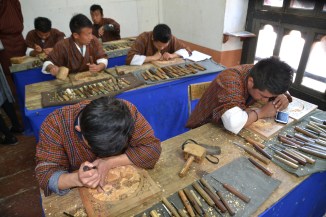
We walked from there to the National Institute for Zorig Cusum, where young people, from 16 onwards, learn traditional arts and crafts. It was very impressive. The students worked in near silence and with fierce concentration as they outlined a design, carved wood, embroidered or painted. Clearly the state is determined not to lose its heritage as each student gets their training free as well as board and lodging. How unlike our own students!

37AF0FF8-13AC-45C3-AB88-14EA51BB582EThe National library is quite something. As you enter the building your eye is drawn to the altar at the end of the room where Buddha presides and the usual 7 bowls of water are placed. The books are all religious texts and you quickly realise that to be a god Buddhist, you need to do some serious reading. The basic Buddhist teachings run to over a 100 large volumes! The library also boasts the world’s largest book at a staggering 5 feet square.

Lunch today was a very good vegetarian selection including momos, a kind of dumpling parcel with vegetables in it, and some vegetable balls in a gingerish sauce.

At the national Textile Institute we learned about traditional weaving and costumes. This was a very impressive modern building with two large galleries. The textiles were stunning as were the costumes. Weaving is done mainly on backstrap looms, in which the weaver sits and provides the tension by leaning back into the strap.

We were then given a ‘shopping opportunity’ by walking down past the row of government provided arts and craft stalls in the centre of the Main Street. Again there was some lovely work at very low prices, but how exactly we would get home a sculpture of a demon with antler horns I do not know. Luckily Christine settled on a couple of scarves.

Archery is the national sport and so we were taken to the local archery ground to watch a competition. It was fascinating. The teams shoot over a long distance at a very small wooden target. The odd time someone hits the thing there is jubilation and a dance by his team mates. Every time he misses they all tell him where he has gone wrong. Each archer has two arrows and ther are about ten a side.

85480E71-3443-452D-882D-6EAE53DEEEFE

I had spotted a large Buddha on a hil some distance away and asked Sunam about it. Immediately Mr Namgay asked if we would like to drive to  see it. Well, of course we would! We climbed steadily along very windy roads and then walked up to the 51 metre high bronze figure. It is still being completed. Inside there are thousands of small buddhas and still many more to be placed on the shelves inside. A covered platform outside is where, at a certain time in the lunar year, the chief abbot will sit and read Buddha’s teachings to the massed pilgrims in the enormous square in front of the statue. We climbed back down vertiginous and clearly unfinished steps, Christine gripping my arm!
We returned to our hotel for a brief rest before being taken to the local dzong. This houses not only a monastery but also the state offices, including the king’s office. His ‘palace’ is just across the river and is no more than a large bungalow. Couldn’t help thinking our royal family could take a leaf! The parliament building lies near by, an altogether grander building. There are two chambers, both elected. The upper chamber has 45 members, one for each province and the lower chamber has 20, one for each region. It all seems rather cosy.

Back to the dzong. The courtyard was beautiful with a magnificent central tower and beautifully painted woodwork. We were only allowed in the monastic zone. As the sun set, red lights came out all around the building. Christine said it looked magnificent. I said it was just a dzong at twilight!

Time for bed I think. We have to be on the road at 9.00.


Bhutan – Day 1

A very early rise as we had to be at the airport by 6.30 for our 8.30 flight to Bhutan. Got there in plenty of time as there was little traffic. Interesting to watch India waking up, a few people still asleep on the pavement, others starting fires and cooking breakfast, stalls being opened, queues forming at bus stops etc..
Got to the airport in plenty of time, but had some problem locating the check-in desk of Bhutan Airlines – apparently they move about! Checked in, quick cup of coffee and our sandwiches from the hotel, abandoned the curry which neither of us could face at 7.00 in the morning, then through security and into the departure lounge. The female announcer here sounds like she once worked for the Wehrmacht- I dread to think what she would do to you if you missed your flight! Joined in the departure lounge by a couple of opportunistic sparrows hopping along the carpet.

Our plane arrived at about 7.45 and we were called not long after. It was already quite full having come from Bangkok. We left spot on time. It was an airbus A319-100 and quite cramped but for a 52 minute flight that didn’t really matter!

As we flew in through the mountains, the sky cleared and the sun shone. In fact it was positively hot with that lovely clearness to the air that you get in mountains. Our driver and our guide were there to meet us and both a delightful. Sunam, our guide, suggested that as there was a festival at the Paro dzong we should visit.

So we drove from the airport to the town and then strolled over the Parochu (river) on a very old covered bridge and up to the dzong. It was packed as people come from miles for the festival and of course there were a lot of visitors as well, including the inevitable Japanese!

The festival takes place in a courtyard with monk# dressed in elaborate and beautiful costumes. Three men with masques were the jesters, but also made sure the dancers kept to the correct steps. They are in the tradition of the wise fool. The press of the crowd was phenomenal and while I could see over their heads, Christine struggled. We extricated ourselves and then went in on the other side where we could see a little better. We shall be returning to the dzong on our way back, when it will be a lot less crowded.

We wandered into the town and went to a restaurant for lunch. Clearly it was a tourist restaurant, but the food was fairly local and tasty, although Christine did not like the rice! Our guid3 took us into a market set up for the festival which was not dissimilar to Bury market in terms of the goods it sold. Then he showed us an outdoor cinema with 6 screens showing Bhutanese films. Again this was a tented structure set up for the festival. Both his parents were in the film industry and he knows many of the actors.

Back in the car we drove through stunning scenery, stopping every so often to look and to take pictures. Now we are in the capital of Thimphu, which has a population of 100,000, but is clearly growing rapidly. Our hotel is modern but with traditional features near the centre.

After a brief rest and unpack we walked up the Main Street of Thimphu, the only capital city not to have traffic lights. However there is quite a bit of traffic! Still there are some lovely buildings and lots of interesting things to see. Tomorrow we will explore some more with Sunam.

Bhutan – the journey 2 – Calcutta


What a fantastic afternoon! Although exhausted we met our guide Depak at 2.00 and asked if we could avoid the usual sites and head for the Howrah bridge. We also asked for a walk as we are very tired of sitting down! He came up trumps.

We began with a visit to St John’s church next to the sit3 of the infamous ‘black hole’. This was built in 1787 and is muc( associated with Warren Hastings and 5he East India Company. It is very similar to St George’s in Chennai. There is a large portrait of the Last Supper with a female lean8ng on Christ’s shoulder and only 11 apostles. Reputedly their faces are those of local dignitaries of the time. In the graveyard is a memorial to the ‘Black Hole’. When the Nawab of Bengal captured the British fort in 1756 he imprisonedover 100 British inhabitants in a small airless cell and 123 died only 23 being found alive in the morning. This was a favourite horror story of the Raj. We also visited an epitaph to a remarkable woman. It is worth a read if you click on it and get it full screen. Look carefully at the dates!


From there Depak took us to the Howrah bridge which is quite a structure. Built in 1943 it was for a long time the only bridge over the Hooghly (Ganges). At times it could take over 3 hours to cross it! Now there are 4 bridges, but it remains very busy.


There are 15 million inhabitants in Calcutta and about 4 million commute in and out each day. Many come by train which is in Howrah the other side of the bridge. We walked down to the Ganges and then through the flower market. People come here to buy flowers fo4 the shrines and temples in the morning and evening, so it is very busy. The flowers are stunning and we watched them making garlands which sell for about 300 rupees each (£3.00) – some for even less. Then we looked at the edge of the spice market before climbing up the steps onto the bridge.


We walked across (photos not permitted for some reason) then down the other side towards the 23 platform main station. We walked down the side of a very busy road and then joined the queue for the ferry. This took us under the bridge and up river some way. It was wonderful and we watched a young boy jumping off the boat and then travelling down its side before grabbing a rubber fender and hauling himself back on board. Unbelievably dangerous, but he was having a great time.


When we docked on the other side, Depak took us over the railway line and into a district of small factories. Cloth and clothing figured highly to start with and then we moved into an area that made statues of mud and straw for festivals. They were stunning and the skill was quite incredible, at all stages of the process. The statues end up in the river at the end of the festivities and the whole process starts again.


Our last stop was a Jain temple, which was beautiful and inspiring. The gardens were very attractive, but the temple itself was covered in beautiful mosaics and pieces of mirror glass. No photos allowed inside, but it was breath taking. Our guide said that Jainism arose out of a need for greater equality that Hinduism with its caste system did not offer.


From there we battled through the traffic to our hotel. Calcutta is a beautiful, fascinating and very green city. I think we have both fallen in love with it. It is not really on the tourist map and we have only seen one other white person all day. LHowever we have had a brilliant start to our holiday and we are looking forward to coming back here after Bhutan. Tonight an early meal and an early night is called for, as we have to be away from here by 5.30 a.m.!


Bhutan – the journey

An interesting start to the journey! Having arrived safely at Gatwick in plenty of time for the flight we left the car and went up the first escalator. We turned onto a second, sleeper escalator and somehow I fell over my bag and ended up travelling upside down towards the top!  I was fine but a bit embarrassed as a woman had spotted my predicament and had come up the escalator to rescue me.  Christine was unable to help as she was surrounded by bags at the bottom of the escalator. I eventually sorted myself out and left the escalator at the top, the right way up.  I was unhurt, but my pride was injured.

After that the two flights, the first to Dubai and then onward to Kolkata were pretty uneventful. The flight was late into Dubai, so we had to walk pretty swiftly to get to our departure gate for Kolkata. It was a long way, but we were glad to stretch our legs.

We were met at the airport and an air conditioned car drove us through the rush hour traffic (our guide called it rush day!) to our very pleasant hotel in the city centre. We are allowed 3 hours rest before we are taken on a sightseeing tour. I think a nap is called for……………

Bhutan – final preparations

Packing nearly completed, visas downloaded, flights checked in and a growing sense of anticipation! Bizarrely I am comparing a band concert at the Apex tonight in aid of local charities. Delightedly to be doing it, but the timing could have been better! Just hope we get to sleep reasonably early, particularly as the clocks go forward tonight. We leave here at 9.30 in the morning. Gatwick to Dubai, Dubai to Kolkata and then a day to recover before we fly to Paro in Bhutan.

Bhutan and North East India – preparations

In ten days time we will be heading off on another adventure, this time to somewhere we have both wanted to visit for a long time – Bhutan. I remember sitting in my junior class at Lympne Primary watching a  Shell film (I think) about ‘Shangri-la’ or Bhutan. I was fascinated by its beauty and thought that I would love to visit it. In 1960 something, it was very difficult to get into as there was not even a driveable road into the place. Today it is much more accessible and has developed a sustainable tourist industry. Kuzu zangpo la - Greetings from Bhutan - Two And Fro

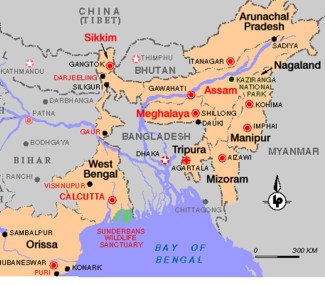
We will fly to Kolkata and then on to Paro in Bhutan. We get our own driver and guide for the two weeks. We shall mainly be in the west and central area of the country. The rivers we shall see are some of the tributaries of the Brahmaputra which we shall then be cruising down during the second part of the holiday. We fly back to Kolkata and then meet Mark Woodrow and other friends and fly out to the far north-east of India for our cruise and then to Darjeeling. Download Bhutan Map

If you would like to follow the blog then please do so. I have no idea what the wi-fi connection will be like in Bhutan, although the guide books say most hotels have it, but I will do my best to post when I can. For me, the blog is my diary which reminds me of what we have done each day once we get home. N E India


Day 11 – Armageddon out of here!

And so to our last full day in Israel. We packed up and were on the road by just after ten, heading for Meggido, a tel about an hour’s drive from Galilee. The sun was shining but there was a nip in the air.

We passed Mount Tabor, resembling a large breast, the nipple being the church on the top – unfortunate, but there it is! Then we saw the sign to Maggido and pulled in to a pleasant car park with views over the Jezreel Valley. We paid our 28 shekels (the standard price for any National Park) and watched a short film explaining the site. There are 25 different layers of settlement in this tel, so sorting one out from another is a major job.

The tel controls the outlet of the Iron Valley to the Jezreel Valley and the Via Maris an international trade route linking Egypt with Mesopotamia, running up through Galilee and into the Bekaa Valley. It was one of the most important cities in the region throughout biblical times, having springs for water and fertile land around it. As a result it became the scene for some major battles and in Revelations Ha Megiddo or Armageddon is where the great battle between good and evil will be fought.

The settlement began in Neolithic times and flourished in the early Canaanite period (the Bronze Age). It became a powerful Canaanite city state during the third and second millenia BCE. It then became an Egyptian protectorate under Akhenaton. During the Israelite period it is mentioned in the books of Joshua and Judges. King Solomon rebuilt it after it was destroyed. Finally it was captured by the Assyrians and there is evidence of palaces and houses from that time (732BCE). Finally it was abandoned in the 3rd century BCE.

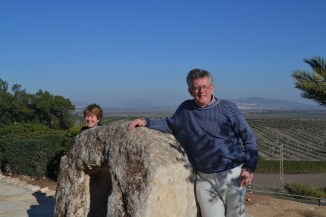
However if has been partly dug in the last two centuries and remarkable finds uncovered. Today it is a superb site, brilliantly laid out with a clear trail and useful info. boards, as well as a sheet with a map. At times it is a little difficult to work out what is what, but some of the structures are clear including two sets of stables which particularly interested Christine!

There is also an impressive gateway and a beautifully constructed granary with stairs built around it leading up and down. There is also an underground tunnel which brought water in to the site from a spring outside.

The views across the valleys are stunning. We wandered around for well over an hour, enjoying every minute. A great last visit of the holiday.

We continued on to Tel Aviv, but the location of the hotel was far from obvious. At one point we ended up in an airport service area, where a charming guard tried to help us. In the end we drove to the Hertz pick up point and decided to take taxi with all our bags etc. back to the hotel. A number of drivers were touting for business, but I had noted that there is a taxi control person who gives out the jobs in order and gives you the taxi number etc. We went to her and she showed us to a cab. She assured us it was only 4 Kms. The driver seemed slightly psychopathic and shouted at Dani as she tried to tell him where we wanted to go. It became clear he was taking us all around the houses. When eventually he got us to the hotel he asked us for 167 shekels ( about £4). I got very angry and said I would report him for over-charging, flashing the piece of paper with his number on it I had been given by his controller. Suddenly the price dropped to 100 shekels. We decided to pay that. He wanted my piece of paper, but I kept hold of it. I probably won’t report him, but he can sweat on that for a couple of days! The charming receptionist at the hotel said that 167 shekels was not so unreasonable! Luckily the hotel provides a complementary shuttle to the airport tomorrow morning. We have to leave at 6.00p.m.!

The hotel is clean, pleasant and soulless but will do us for the next 12 hours. I have found my vest, fleece and thick jumper for tomorrow’s return to the U.K.! Sounds like we are in for a bit of a shock weather wise! What a wonderful 12 days it has been, though! We have seen some amazing sites, have a much better impression of the Holy Land, and met some delightful people.

image


Day 10 Tiberias and around

We told Dani and Mike how much we enjoyed Magdala, so they decided to go. As we were planning to walk in the Arbel National Park, it was easy fir yes to drop them off. We had heard about the park on Trip Advisor and the views from the top over Galilee sounded superb. The park seemed well signposted from Magdala and so we turned up the 807 only to get snarled up in some roadworks. In the middle of these was our turning to the park. No problem, we got through and headed up a hillside. No sign if the park. Then we hit a speed bump at some speed (about 30 but it felt much more!). There was no warning and the bumps were cleverly blended into the road, so very hard to see. We crawled up the road and into a housing estate. We are getting used to thus! No sign of the park, so we turned around and came back down over the bumps. The area looked rather run down with a lot of litter and what appeared to be shanty housing on one side of the road. A small car park lay to our right and a green gate which looked like. Belonged to a National Park. We parked the car doing our best to avoid the broken beer bottles littering the area. Still no signs, entry gate, etc.

image

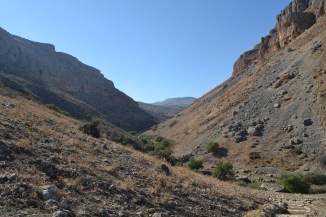
We walked through the gate, and along beside a small stream and eventually came on some large green notice boards which announced that this was indeed the Arbel N.P.. The path led up the side of the valley at a steep angle. A superb V shaped valley opened up below us and Christine did herself proud by instantly recognising some interlocking spurs! All these years of field trips (holidays) have not been wasted!

image

The path was well made with steps in places and we zigzagged up the side of the mountain towards the sheer cliffs above us. As we got closer it became clear that there were cave dwellings in the cliff side and a sign eventually pointed to a fortress. We continued around the side of the cliff towards the Sea of Galilee. We could see a party of children on the other path. Around a bend we met a couple and then a few more scrambling down a limestone escarpment. This was our route to the top! While I could probably have scrambled up, Christine decided that it was too much, understandably, not having my long legs, so we turned round and set off back down.

However the views were stunning. We could see Magdala an Capernaum below us. Beautiful cyclamen were growing in the risks all around us.

We met a couple who spoke good English and seemed to have a N.P. map and guide. On further investigation we discovered that the proper park entrance was off a different road at the top of the mountain, and not where we had come in! We had taken the back passage into Arbel. The good news was we had saved 56 shekels, but the bad news was we had probably missed out on some better views down the whole length of the lake.

Oh well, it had still been a great walk  and so we happily descended to our car. We both felt in need of a coffee and as we had had a great cup at Magdala yesterday we called in again today. Dani and Mike were still there so we joined them. Unfortunately the Irish woman with verbal diarrhoea had latched on to them, so once we had finished our drinks we offered them an ‘out’ by suggesting a lift into Tiberias. However they were, by now, heavily into the pantheon of Catholic saints, so Dani declined and said they would make their own way home.

Tiberias is a bit like Blackpool with sunshine. However at thus time of year it is comparatively quiet, but still sunny if cool. We decided to visit the old part of the town, but were frankly disappointed as we negotiated rubbish tips and smelly passages that led nowhere. We eventually got onto the prom. which was pleasant enough. It being Friday there were a great deal of Hassidic Jewish families out and about. We had been slightly overrun by them in the morning as they crossed the main road into Tiberias in waves. One of them even stood in the road and said Kaddish in front of the cemetery, the traffic having to dodge around him.

Some had now descended to the beach and to our surprise and amusement were now skinny dipping in the Sea of Galilee. Frankly many of them should not have been allowed out their clothes even in their own bedrooms, never mind on a public beach in the middle of a town dedicated to pleasure. Still, we were not the only ones taking pictures (out of disbelief, I should say, not for any salacious reason I can assure you!).

Christine had expressed a desire to go on the Sea of Galilee and as walking was not an option, we managed to find a place that hired out boats for 100 shekels for half an hour. The boat steered like an oil tanker and the motor sounded as though it was suffering from tuberculosis but somehow we managed to chug up and down the Tiberian coastline and enjoy a view of the shore – naked, overweight Jewish men not withstanding.

Safely back in dry land we headed for the town centre but stumbled on a vast marquee to which large numbers of Ultra-Orthodox Jews were hurrying. We have no idea why. Perhaps some charismatic rabbi was in town? Perhaps this happens every sabbath in Tiberias. I suspect we’ll never know.

Once we made it to the town centre we discovered all the shops were shut – the Sabbath, of course! We did find a snack bar open so I ordered falafel in a pitta bread. For a mere 15 shekels it was money well spent as it was delicious!

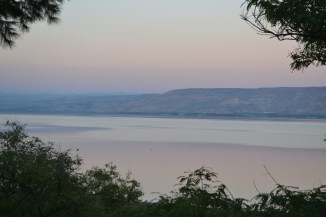
We got home quite early so Christine suggested the walk down to Yardinet that we had been given the map for  when we arrived. It was….interesting, taking us through farmyards, past industrial estates and into a kibbutz. We reached Yardinet and were disappointed that no pilgrims were being baptised. However it is a beautiful part of the Jordan and we watched the catfish and relaxed on the bank. As the sun set, we headed back trying to compete the circuit. This led us along a main road and through a cemetery – presumably for the victims who had tried to walk along said road. We did get a couple of good views of the lake, bu we’re glad when we could head off across a field and into a housing estate on the way home.

image

I could write a book on Israeli housing estates…….and their lack of road signs.

Back to Tel Aviv tomorrow via Armeggedon. Should be interesting!